
Fashion and Personal Style: A Practical Guide to Looking Effortlessly Put Together
Fashion is not about owning the most expensive clothes or copying every new trend. Personal style is about understanding what suits your body, lifestyle, personality, and budget—and then using clothes and accessories to express it confidently. A simple outfit can look polished with the right accessories, while a timeless wardrobe can save money and reduce decision fatigue. Jewellery, when chosen thoughtfully, can tie an entire look together.
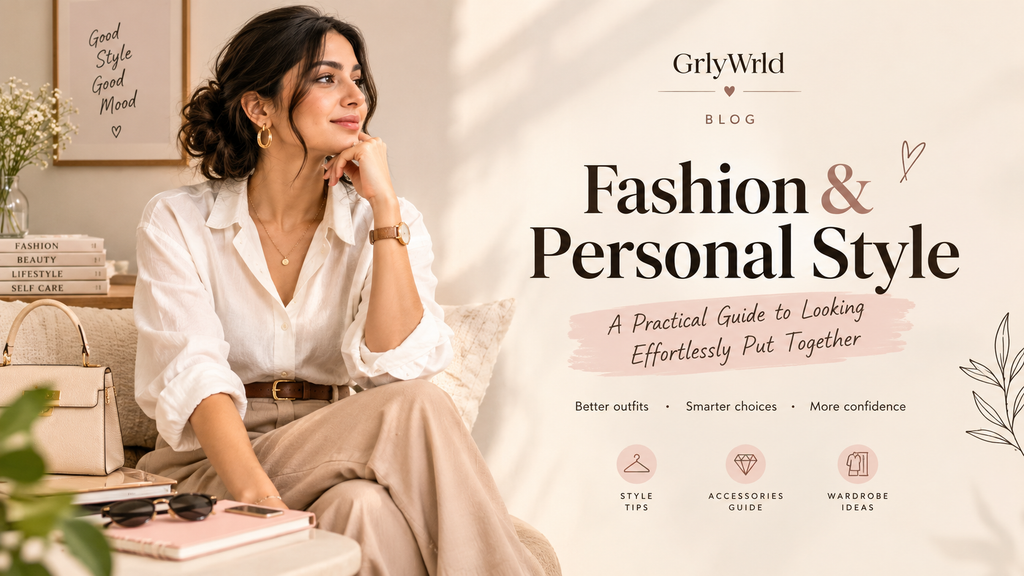
This guide covers three essential style skills: how to accessorize a simple outfit, how to build a timeless wardrobe on a budget, and how to match jewellery with different outfits. Whether you are a student, a working professional, or someone rebuilding their closet, these ideas will help you create outfits that feel intentional rather than accidental.
Why Personal Style Matters
Personal style is the visual language through which you present yourself to the world. It does not require following every trend or wearing designer labels. Instead, it is built through repetition: the colours you enjoy wearing, the silhouettes that make you feel comfortable, the fabrics you prefer, and the accessories that make an outfit feel complete.
A strong personal style offers several benefits:
- It makes getting dressed faster because you know what works for you.
- It helps you shop more intentionally and avoid impulse purchases.
- It allows you to look polished even in basic clothing.
- It gives you confidence because your outfit reflects your personality.
- It helps you build a wardrobe where most pieces work well together.
Fashion trends can be fun, but personal style gives you a foundation. Trends come and go; a well-understood sense of style remains useful for years. The goal is not to look like someone else, but to become the most confident version of yourself.
How to Accessorize a Simple Outfit
A simple outfit—such as a white shirt with blue jeans, a black dress, or a plain kurta with trousers—is often the easiest to style. Because the clothing is clean and understated, accessories have room to add personality without making the look feel cluttered.
The most important rule is balance. Accessories should enhance the outfit, not compete with it. If one piece is bold, keep the rest subtle. If your outfit is very minimal, you can be slightly more expressive with your accessories.
Start With One Focal Point
Every well-accessorized outfit usually has one focal point. This could be a statement necklace, colourful earrings, a structured handbag, a printed scarf, bold shoes, or a striking watch. Once you choose that standout item, let the other accessories support it rather than fight for attention.
For example, if you wear large gold hoop earrings with a plain black top, choose a simple chain, minimal rings, and a neutral bag. If you carry a bright red handbag, keep your jewellery understated so the bag remains the highlight.
Choosing one standout accessory and keeping the rest complementary is a widely recommended approach to balanced accessorizing.
Use Accessories to Add Colour
Neutral outfits are perfect for experimenting with colour. A white t-shirt, beige trousers, or a black dress can handle a colourful scarf, vibrant earrings, a patterned bag, or bold shoes. Accessories are also an easy way to try a colour you may not want to wear in a full garment.
If you are unsure about colour, start with one colourful accessory against a neutral base. This creates interest without overwhelming the outfit. Colours such as mustard, emerald green, cobalt blue, burgundy, and rust can instantly make basic outfits look more considered.
Play With Texture
Accessories are not only about colour; texture matters too. A plain outfit becomes more interesting when you mix materials thoughtfully. For instance:
- Pair a cotton shirt with a woven tote bag.
- Add a leather belt to soft linen trousers.
- Wear a silk scarf with a chunky knit sweater.
- Combine metallic jewellery with a matte fabric outfit.
- Use suede shoes to soften a structured blazer look.
Mixing smooth leather with chunky knits or pairing sleek metal jewellery with soft scarves can create visual depth and make a simple outfit feel more styled.
Match Accessories to the Occasion
The same outfit can look completely different depending on the accessories. A white shirt and black trousers can work for the office, brunch, or an evening event simply by changing your bag, shoes, and jewellery.
- For work: choose a structured tote, closed-toe shoes, a watch, and small earrings.
- For casual outings: choose sneakers or flats, a crossbody bag, and delicate jewellery.
- For evenings: choose heels or polished boots, a small clutch, and slightly bolder jewellery.
- For college or travel: choose a comfortable backpack, sneakers, and minimal accessories.
Casual looks often work best with simple crossbody bags, comfortable sneakers, and delicate jewellery, while more formal occasions can handle refined shoes and stronger accessories.
Follow the “Less Is More” Rule
If you feel unsure, remove one accessory before leaving the house. This simple habit prevents over-accessorizing. You do not need to wear a necklace, earrings, rings, bracelets, a scarf, a belt, and a statement bag all at once.
A useful formula is:
- One statement accessory
- One or two supporting accessories
- One practical item, such as a bag or watch
For example, a plain dress can look complete with statement earrings, a slim bracelet, and a neutral handbag. Adding a bold necklace, multiple rings, and a printed scarf may make the outfit feel busy.
Accessorize According to Your Body and Comfort
Style should feel good, not just look good. If heavy earrings hurt your ears, choose lightweight hoops or studs. If belts feel restrictive, use bags, scarves, or jewellery to define your look instead. Accessories should support your comfort and confidence.
Also consider proportions. If you are petite, very oversized bags or extremely long necklaces may overwhelm your frame. If you are tall, smaller accessories can still work, but larger pieces may balance your proportions beautifully. There are no strict rules—use them as starting points and adjust based on what feels right.
How to Build a Timeless Wardrobe on a Budget
A timeless wardrobe is not about buying expensive clothes. It is about choosing versatile, well-fitting pieces that can be styled in many ways across seasons. When done well, it saves money because you buy fewer items but wear them more often.
The key is to prioritize quality, fit, colour, and versatility over trends.
Begin With Neutral Basics
Neutral colours such as white, black, grey, navy, beige, cream, and denim blue form the foundation of a flexible wardrobe. They pair easily with one another and create a clean backdrop for colourful or trend-based pieces.
A practical starter wardrobe can include:
- White and black t-shirts
- A well-fitted pair of jeans
- Dark trousers or tailored pants
- A plain white shirt
- A black or navy dress
- A simple knit sweater
- A denim jacket
- A blazer
- A midi skirt or palazzo pants
- Comfortable flats, sneakers, and one pair of formal shoes
- A neutral handbag
- A classic belt
Classic pieces such as tailored trousers, simple knits, blazers, white shirts, plain midi skirts, leather flats, trainers, wool coats, and crossbody bags are often considered strong foundations for a timeless wardrobe.
Focus on Fit Before Brand
Fit matters more than price. An inexpensive garment that fits well can look more expensive than a costly item that is too tight, too loose, or poorly proportioned. When shopping, check the shoulder seams, waistline, sleeve length, and overall silhouette.
If something almost fits, consider basic alterations. Hemming trousers, taking in a waist, or shortening sleeves can transform an ordinary piece into something that looks custom-made. Alterations are often more affordable than buying new clothes and can significantly improve how an outfit looks.
Buy Fewer, Better Pieces
Instead of buying five cheap tops that lose shape after a few washes, consider buying one or two better-made basics. This does not mean you must buy luxury brands. It means checking fabric quality, stitching, colourfastness, and overall construction.
Look for:
- Natural or durable fabrics such as cotton, linen, wool blends, and denim
- Clean stitching and secure buttons
- Shapes that suit your body
- Colours you can wear repeatedly
- Styles that work for more than one occasion
A useful budgeting method is to divide your clothing budget across the items you actually need. For example, you may spend more on a coat or shoes and less on basic t-shirts, since some items naturally require a higher investment than others.
Shop Second-Hand and Off-Season
Second-hand shopping is one of the smartest ways to build a timeless wardrobe on a budget. Thrift stores, consignment shops, online resale platforms, and local flea markets can offer quality clothing at a fraction of the original price. Many people find branded, vintage, or well-made pieces simply by searching consistently.
Off-season shopping is another effective strategy. Buy winter coats at the end of winter, summer dresses at the end of summer, and formal shoes after festive or wedding seasons. Retailers often discount seasonal stock heavily, allowing you to buy items you will need next year at lower prices.
Create a Colour Palette
A personal colour palette prevents your wardrobe from feeling random. Choose three to five base colours and two or three accent colours.
For example:
- Base colours: black, white, beige, navy
- Accent colours: olive green, burgundy, mustard
When most of your clothes fit within this palette, almost everything will mix and match. This makes packing easier, reduces shopping mistakes, and helps you create more outfits with fewer clothes.
Use the Cost-Per-Wear Method
Cost-per-wear helps you judge whether a purchase is worthwhile. Divide the price of an item by the number of times you expect to wear it.
For example, if you buy shoes for ₹3,000 and wear them 100 times, the cost per wear is ₹30. If you buy a trendy top for ₹1,500 but wear it only twice, the cost per wear is ₹750. The cheaper item is not always the better value.
This method encourages smarter shopping. Ask yourself before buying:
- Can I wear this with at least three items I already own?
- Will I still like it next year?
- Does it suit my daily lifestyle?
- Is it comfortable enough to wear often?
- Am I buying it because I need it or because it is on sale?
Take Care of What You Own
A timeless wardrobe also depends on maintenance. Wash delicate clothes gently, store knits folded instead of hung, polish shoes, repair loose buttons, and keep garments clean and well-pressed. Small habits extend the life of your clothes and protect your budget.
Simple care practices include:
- Following washing instructions
- Air-drying delicate fabrics
- Using garment bags for special pieces
- Rotating shoes to prevent early wear
- Repairing items instead of replacing them immediately
- Donating or reselling clothes you no longer wear
A wardrobe does not become timeless only through shopping. It becomes timeless through thoughtful use, care, and repetition.
How to Match Jewellery with Different Outfits
Jewellery can completely change the mood of an outfit. The same black dress can look minimal with stud earrings, romantic with layered chains, bold with chunky hoops, or festive with traditional pieces. The secret is to match jewellery to the outfit’s neckline, colour, occasion, and overall style.
Start by looking at the clothes you are actually wearing: their neckline, sleeve length, colour, fabric, and level of detail. Then choose jewellery that supports the look rather than competes with it.
Match Jewellery to the Neckline
The neckline is one of the most important factors when choosing a necklace.
- Crew neck: Works well with longer pendant necklaces or layered chains.
- V-neck: Pairs beautifully with a V-shaped pendant or a necklace that follows the neckline.
- Scoop neck: Suits shorter necklaces, chokers, or curved pendants.
- Boat neck: Looks best with statement earrings and no necklace, or a very long chain.
- Collared shirt: Works with a small pendant layered over the shirt or with earrings only.
- Off-shoulder neckline: Complements chokers, short necklaces, and bold earrings.
- High-neck outfit: Choose earrings, rings, or bracelets instead of a necklace.
The shape of the necklace should complement the shape of the neckline, creating balance rather than visual conflict.
Choose Metals Based on Mood and Colour
Gold and silver create different moods. Gold tends to feel warm, rich, and classic, while silver often looks modern, cool, and minimal. Neither is better; the right choice depends on your outfit and personal preference.
Gold generally pairs well with warm colours such as red, orange, mustard, brown, olive, cream, and earthy tones. Silver works beautifully with cool colours such as blue, grey, white, black, lavender, and navy. Matching your jewellery metal to the hardware on your clothes—such as buttons, zippers, or bag clasps—can also make an outfit look more intentional.
That said, mixing metals is perfectly acceptable when done deliberately. A layered necklace with both gold and silver tones can look modern if the pieces share a similar style or finish.
Keep Simple Outfits Open to Statement Jewellery
Plain outfits can handle more creative jewellery. A simple white shirt, black dress, or solid-colour kurta gives you space to wear bold earrings, layered necklaces, colourful stones, or a chunky ring. Minimal clothing acts like a blank canvas, allowing jewellery to stand out.
For example:
- White shirt and jeans: Add gold hoops, a pendant necklace, and a watch.
- Black dress: Add silver statement earrings and a sleek bracelet.
- Plain saree or kurta: Add traditional jhumkas, bangles, or a layered necklace.
- Beige co-ord set: Add colourful beaded jewellery or a bold cocktail ring.
However, if your clothing already has heavy embroidery, prints, sequins, or embellishment, choose simpler jewellery. Let one element lead the outfit.
Match Jewellery to the Occasion
Jewellery should suit not only the outfit but also the setting.
- Office: Choose small studs, thin hoops, a delicate chain, a watch, and one or two rings.
- College: Choose lightweight earrings, simple chains, beaded bracelets, or stackable rings.
- Casual outings: Choose minimal gold or silver pieces for a relaxed yet polished appearance.
- Weddings and festive events: Choose statement earrings, bangles, layered necklaces, or traditional jewellery.
- Evening events: Choose sparkling studs, bold cuffs, or a striking pendant.
- Travel: Choose durable, lightweight pieces that will not get tangled or damaged easily.
Minimalist ensembles can be elevated with simple studs and a single ring, or styled with multiple light layers for a more expressive look.
Balance Earrings, Necklaces, and Rings
You do not need to wear jewellery everywhere at once. If your earrings are large, keep the necklace simple or skip it. if your necklace is bold, choose smaller earrings and you wear several rings, keep bracelets minimal.
A simple balancing rule:
- Bold earrings + no necklace or a thin chain
- Statement necklace + small studs
- Layered necklaces + small earrings
- Multiple rings + one simple bracelet
- Chunky bracelet + minimal rings
Accessories should not compete for attention; choosing either earrings or a necklace can be an easy way to maintain balance.
Use Colour Thoughtfully
Jewellery can add colour to neutral clothing. A plain white t-shirt can be paired with vibrant green, yellow, or lilac stones, while a monochrome outfit can be made cohesive with jewellery in a matching shade.
If your outfit is colourful, choose jewellery in a neutral metal or a colour already present in the clothing. If your outfit is neutral, jewellery can introduce contrast, shine, or personality.
For example:
- Navy outfit: Try gold, pearl, or warm orange accessories.
- Burgundy outfit: Try emerald green or gold jewellery.
- Black outfit: Try silver, pearl, turquoise, or red accents.
- White outfit: Almost any metal or gemstone colour works well.
Contrasting colours can create a dynamic, intentional look when used carefully.
Build a Small, Versatile Jewellery Collection
You do not need a huge jewellery collection to style outfits well. A few versatile pieces can serve many looks:
- Small stud earrings
- Medium gold or silver hoops
- A delicate pendant necklace
- One statement necklace
- A simple bracelet or bangle
- Two or three everyday rings
- One traditional or festive pair of earrings
- A classic watch
Starting with subtle basics such as stud earrings, simple chains, plain rings, and bangles gives you a foundation that works with almost anything. From there, you can add statement pieces gradually based on your personal style.
Bringing It All Together
Fashion becomes easier when you stop treating every outfit as a separate problem. Instead, think of your wardrobe as a system: neutral basics form the foundation, accessories add personality, and jewellery provides the finishing touch.
A simple formula for a polished outfit is:
- Start with one or two well-fitting basics.
- Add one layer or structural piece, such as a blazer, jacket, or scarf.
- Choose one focal accessory.
- Add jewellery that suits the neckline, colour, and occasion.
- Check comfort, proportion, and balance before leaving.
You do not need a large budget to look stylish. You need clarity about what suits you, a few versatile pieces, and the confidence to repeat your favourite combinations. Personal style grows over time through experimentation, observation, and small improvements.
The best-dressed people are not always the ones wearing the newest trends. They are often the ones who understand how to make simple clothes look intentional. With thoughtful accessorizing, smart wardrobe planning, and well-matched jewellery, you can create outfits that feel timeless, comfortable, and uniquely yours.
Boss, here are 5 SEO-friendly FAQs for your GrlyWrld blog, Fashion & Personal Style Guide. These cover all three topics: accessorizing outfits, building a timeless wardrobe on a budget, and matching jewellery with different outfits.
Frequently Asked Questions (FAQs)
1. How can I accessorize a simple outfit to look more stylish?
You can make a simple outfit look stylish by adding statement earrings, a delicate necklace, a watch, a belt, or a fashionable handbag. Choose one standout accessory and keep the remaining pieces simple to create a balanced, polished look.
2. How can I build a timeless wardrobe on a budget?
Start with versatile basics such as white shirts, black tops, well-fitting jeans, neutral trousers, and a classic handbag. Choose quality pieces that are easy to mix and match, shop during sales, and avoid impulse purchases to make the most of your budget.
3. How do I choose the right jewellery for my outfit?
Choose jewellery according to your outfit’s neckline, colour, fabric, and occasion. Delicate necklaces and small earrings work well for everyday outfits, while statement earrings, layered necklaces, and bangles can complement festive or evening looks.
4. What accessories should every woman have in her wardrobe?
Useful everyday accessories include stud earrings, hoop earrings, a simple pendant necklace, a versatile bracelet, a classic watch, a neutral handbag, a belt, and a scarf. These pieces can be combined with different outfits for casual, professional, and special occasions.
5. How can I look fashionable without spending too much money?
Focus on well-fitting clothes, neutral colours, versatile accessories, and creative outfit combinations. Restyle the clothes you already own, shop second-hand or during seasonal sales, and invest in pieces you can wear repeatedly rather than following every passing trend.